When we built our first chicken tractor for the farm, we knew it probably wouldn’t be perfect. Like most things on the homestead, the best lessons came after actually using it every single day.
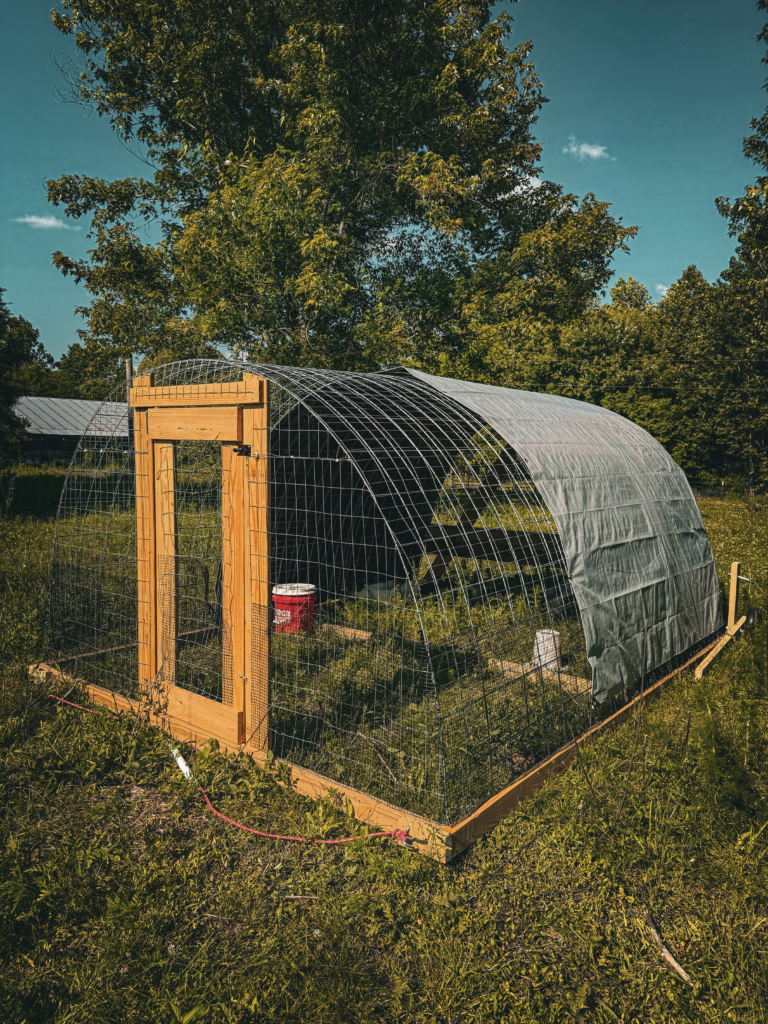
After raising birds in the first tractor, moving it through pasture, dealing with predators, and learning what worked (and what definitely didn’t), we built a second version using the exact same frame and overall structure — but with several important improvements.
Here’s what we changed.
1. We Simplified the Wheel System
The biggest weakness on our first tractor ended up being the wheel setup.
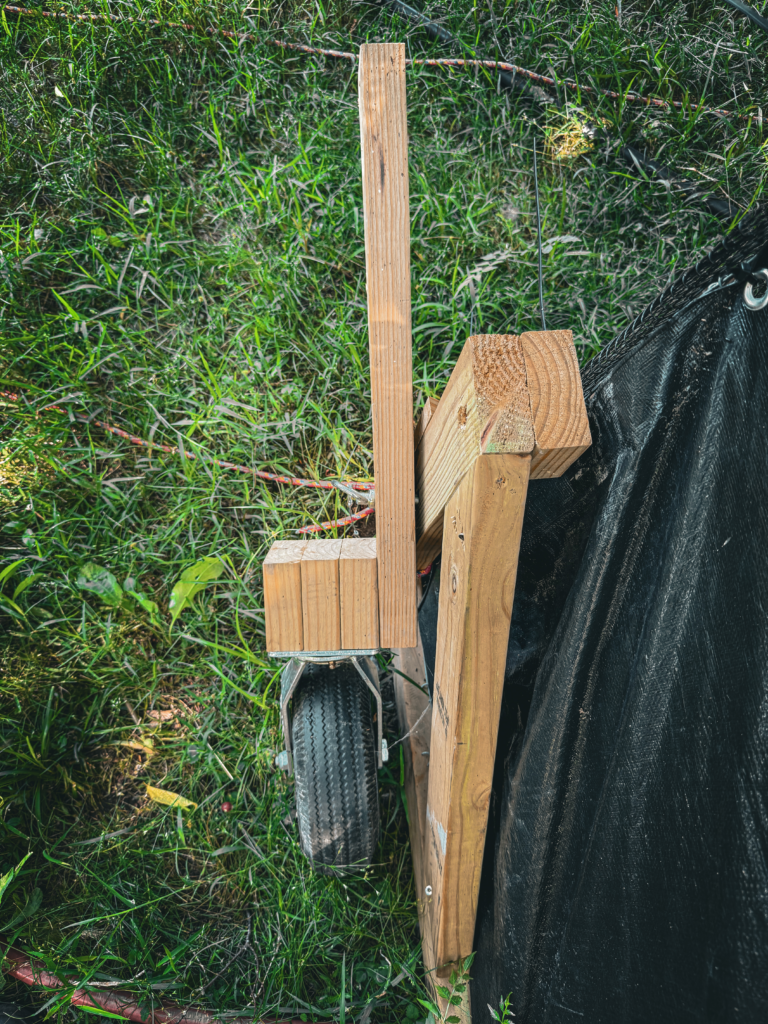
Originally, we mounted wheels off to the side of the lever system used to raise and lower them. On paper it seemed like a good idea, but in reality it created too much strain on the mounting points and eventually broke off.
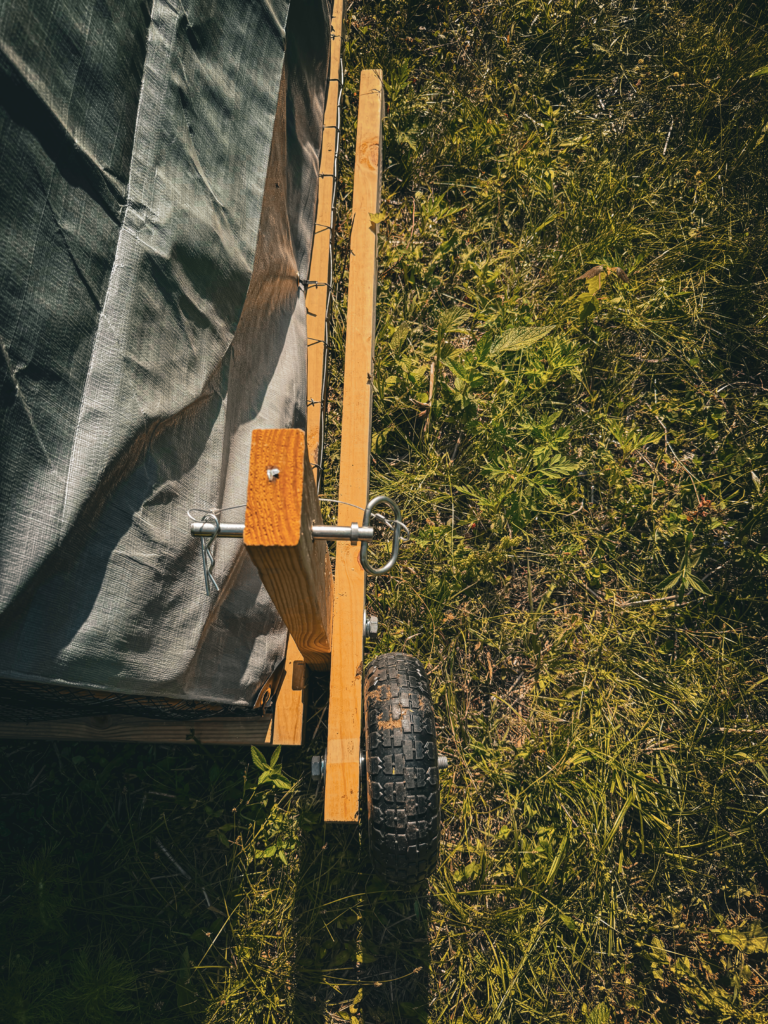
For the second design, we switched to 10” flat-free wheels with a 2.2” hub offset and used a 6” hex bolt as the axle, mounting the wheel directly into the lever itself. This created a much stronger setup overall and eliminated the weak side-mounted design that failed on the first tractor. The new wheel system feels sturdier, simpler, and much more reliable when moving the tractor across pasture.
We also originally placed wheels on all four corners of the tractor. While it sounded helpful, it added complexity without really improving how the tractor moved across pasture.
For the second build, we simplified everything:
- Wheels only on the back
- Stronger setup using axels
- Less stress on the frame
- Easier to move overall
Sometimes simpler really is better.
2. We Added 1/2” Hardware Cloth Around the Bottom
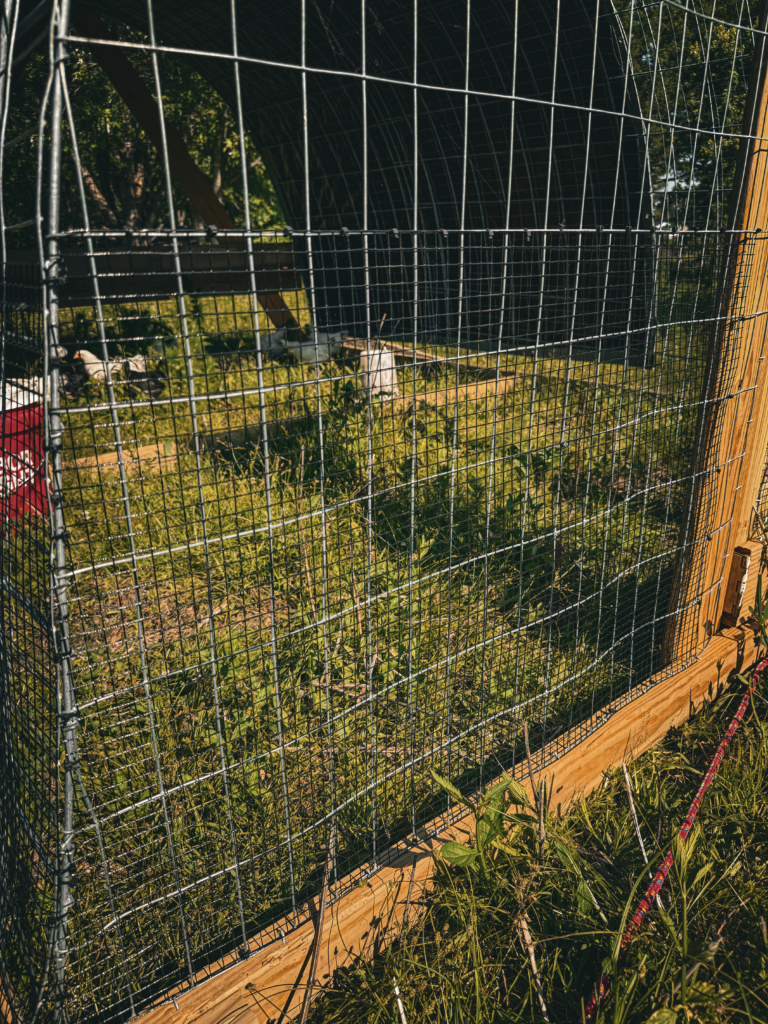
One of the biggest upgrades was adding 2-foot-high 1/2” hardware cloth around the entire bottom perimeter of the tractor.
On the first tractor, we learned quickly that standard goat wire alone left too much opportunity for:
- small birds slipping out
- predators reaching in
- unwanted nighttime visitors
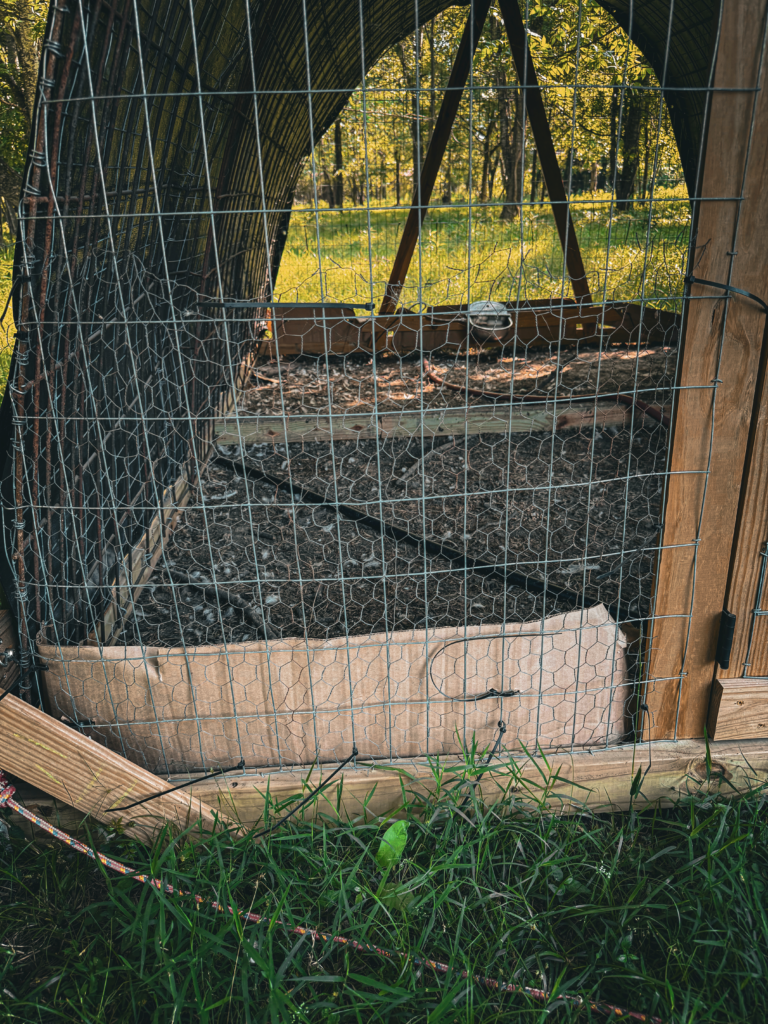
Not long after moving birds into the first tractor, we found ourselves scrambling to patch problem areas using scraps of cardboard and some old chicken wire we found around the property just to get by temporarily. It worked well enough in the moment, but it definitely wasn’t a long-term solution and showed us pretty quickly where the weak points were.
The hardware cloth made a huge difference immediately. It helps keep the birds safely inside while also adding an extra layer of protection against predators.
3. We Used a Smaller Tarp
On the first tractor, we covered too much of the structure with tarp.
At first, more shade sounded like a positive thing — especially in Alabama heat — but we realized the birds actually benefited from having both shaded areas and direct sunlight available throughout the day.
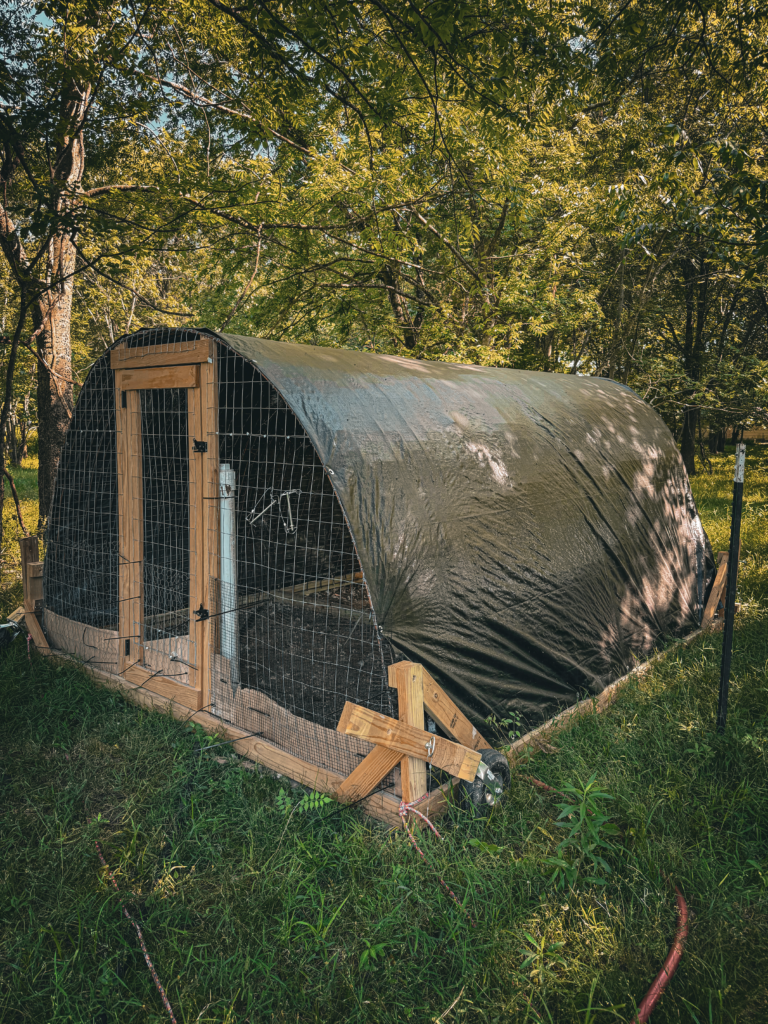
For the second tractor, we intentionally used a smaller 8 x 16 ft heavy duty tarp so part of the tractor stays exposed to sunlight.
Now the birds can choose:
- shade when they need it
- sunshine when they want it
- better airflow overall
It ended up creating a much more balanced environment.
4. We Changed the Door Latch Design
Predator-proofing chicken tractors becomes a constant learning experience.
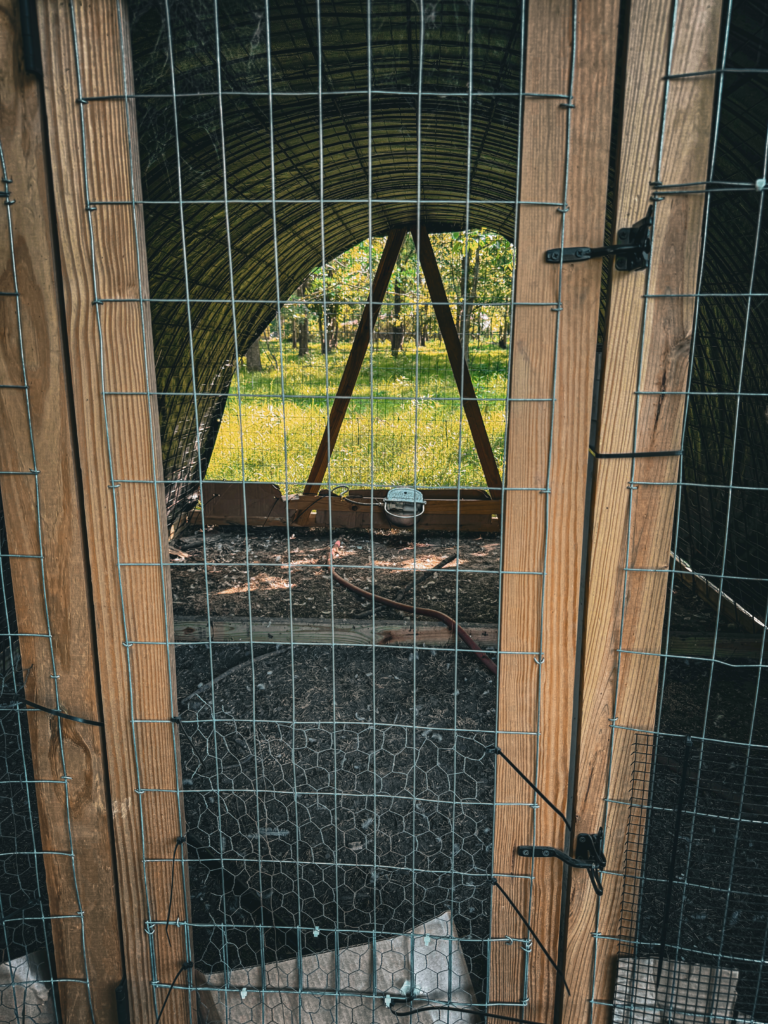
On our first tractor, we installed latches on both the top and bottom of the door because we were trying to outsmart grubby little raccoon hands. The problem was…with the second design, the added 1/2” hardware cloth made it so we couldn’t reach out and unlock it after chores.
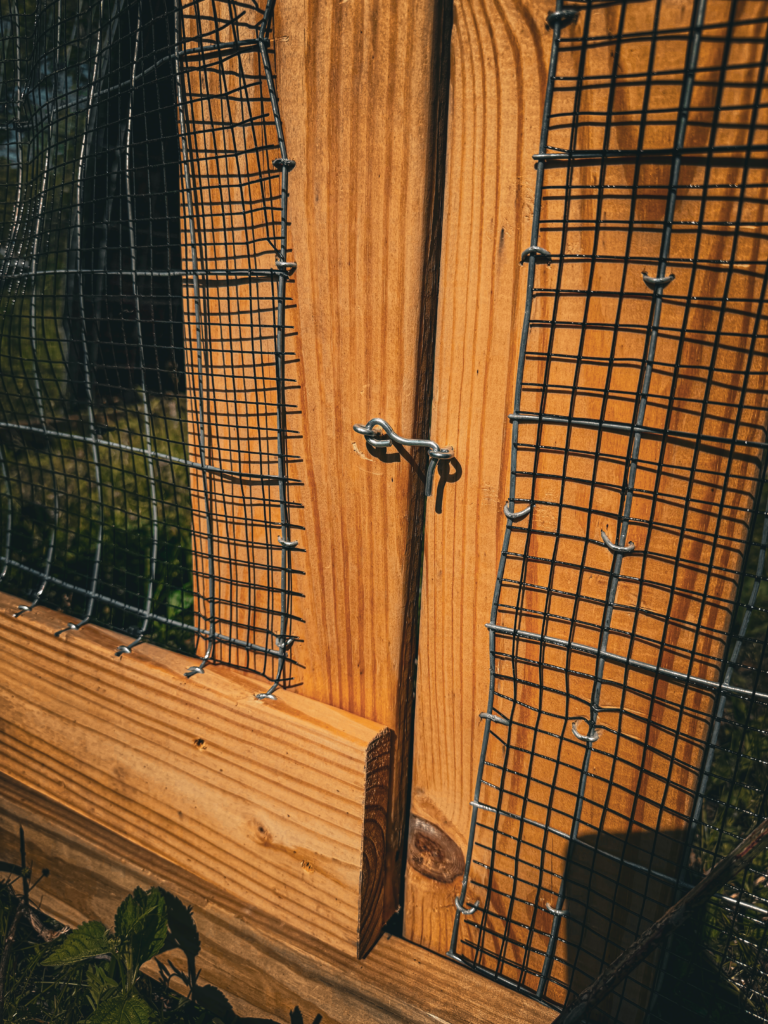
So instead of the complicated lower latch setup, we switched to a simple eye hook latch on the bottom that we can secure once we’re done inside the tractor.
It’s:
- simpler
- faster
- still secure
- less frustrating during chores
5. We Picked a Better Spot in the Pasture
This improvement had nothing to do with the tractor itself — and everything to do with placement.
The first tractor sat on uneven ground, which constantly created gaps underneath the frame. Those gaps became an ongoing issue for both escapes and predator concerns.
For the second tractor, we chose a much flatter area of pasture from the beginning.
That single decision made a massive difference:
- fewer gaps
- better ground contact
- easier moves
- more security overall
Sometimes the problem isn’t the build. It’s the location.
Homestead Projects Are Always Evolving
One thing we’ve learned over and over again is that homestead projects rarely come out perfect the first time — and that’s okay.
Every mistake teaches something.
Every improvement makes chores easier.
And every version gets a little closer to what actually works for your land and your animals.
This second chicken tractor already feels like a huge improvement, and we’re sure we’ll continue tweaking things as we go.
That’s part of the fun of building it yourself.
First Tractor
Second Tractor